

ARTISTIC VOICES - INTERVIEW WITH AMANDA HOMA (CIRCUSNEXT SUPPORTED ARTIST)
As part of its project, CS VOICES, Circostrada aims to continue and deepen the synergies established with fellow institutions and European peers during the previous project, CS BODY/IES, through the publication of an article written by artists who have received support via an ARTCENA, circusnext, IN SITU or Perform Europe scheme.
This time, discover the work of Amanda Homa, a contemporary circus artist, shortlist of circusnext, a European platform dedicated to identifying and supporting the next generation of contemporary circus creators. In this interview, Amanda reflects on her personal and interdisciplinary artistic process, the current challenges in the contemporary circus sector and the international dimensions of her work.
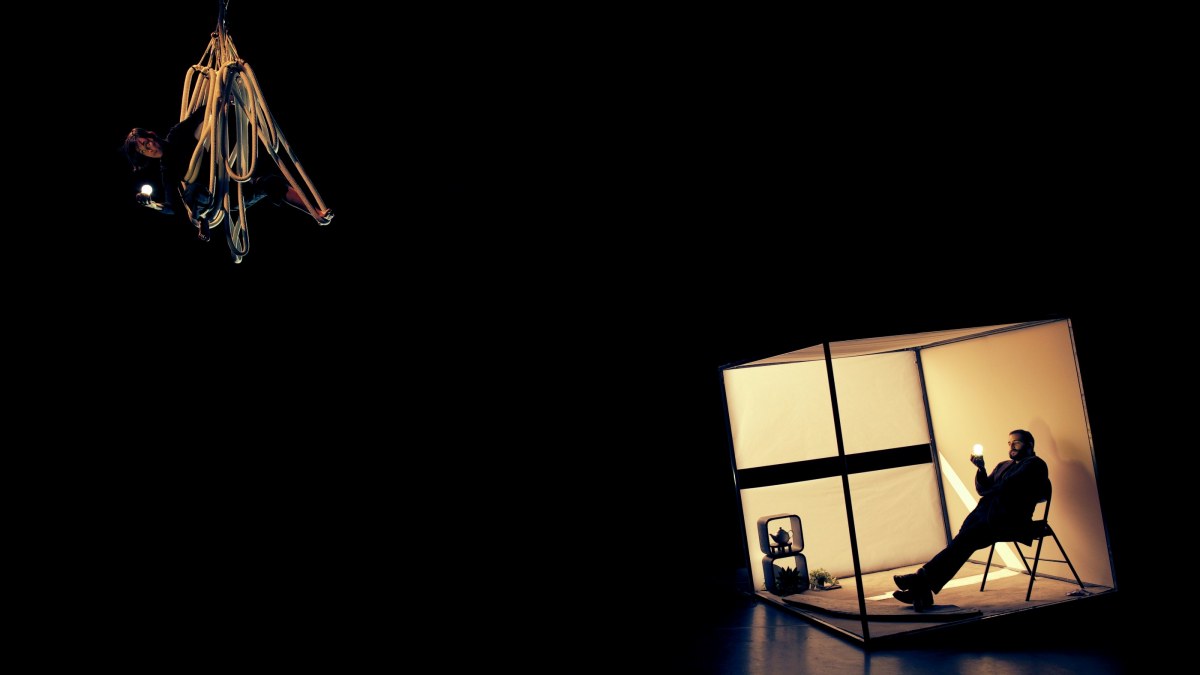
Your practice is deeply interdisciplinary. How do you approach collaboration across different artistic languages?
I approach these exchanges as a way to better understand my own practice and to question convictions that feel outdated. The friction that can appear between different artistic languages is an interesting space to fracture habits that might otherwise limit the emergence of something new. Searching for a common language to communicate my practice and ideas with artists from other fields becomes a translation exercise: it asks me to be precise about what I really mean, but also to be a good listener and to stay open to new definitions of ideas and concepts, especially those I think I’m already used to.
I really enjoy these kinds of collaborations and it has become an important exercise for me. At the same time, I’ve realised that I’m often very clear and attached to my own ideas. The collaborations that work best for me are therefore the ones that are completely goal-free, where we can experiment without worrying about the end result. It becomes a playful space where no artistic identity is at stake, making it easier to try things I’m not fully convinced by and to be surprised by them. Often what I learn lies in the small details of these explorations. Even if I rarely end up loving an idea I didn’t believe in at first, the process itself is full of unexpected discoveries and feels really worth it. I see transdisciplinary collaboration as a way of continuing to study and learn, by opening a space to create knowledge among peers.
Your recent projects engage with forms of intimate discomfort: being “lost in translation,” solitude, the experience of constant transformation... Could you describe your artistic process — how you research, experiment, and transform lived experiences into circus language?
I really like the way the notion of “intimate discomfort” is formulated. Discomfort is a crucial sensation to create movement; it is a strong invitation to change—change the position of the body, the place we are in, what we are doing, and sometimes even the way we live. I try to recognise the precise moment when discomfort first appears, before it transforms into something else. This requires accuracy and practice, especially since neo-colonial logics have taught us to immediately confuse discomfort with distress or danger, and to mainly approach it from a negative perspective.
I often look at discomfort as an important holder of information and action-potential. “Use discomfort as a way-in, not as a way-out,” as Robin DiAngelo says, is a precious notion for me. I rely on this sensation to find ways to engage and face difficult questions. For me, intimate discomfort is the ground that allows me to research how individual movement can generate a collective one. I don’t think in terms of translating an idea into circus or circus into an idea. I’m rather looking for resonances between the real actions of circus practice and the real actions of daily life. For my circus practice to feel honest, this is what I need to focus on, without adding extra narratives. When I work with more narrative structures, meaning emerges through the order of things and the scenography. I don’t add theatrical acting to circus practice, as the act itself—hanging, lifting—is already saying a lot.
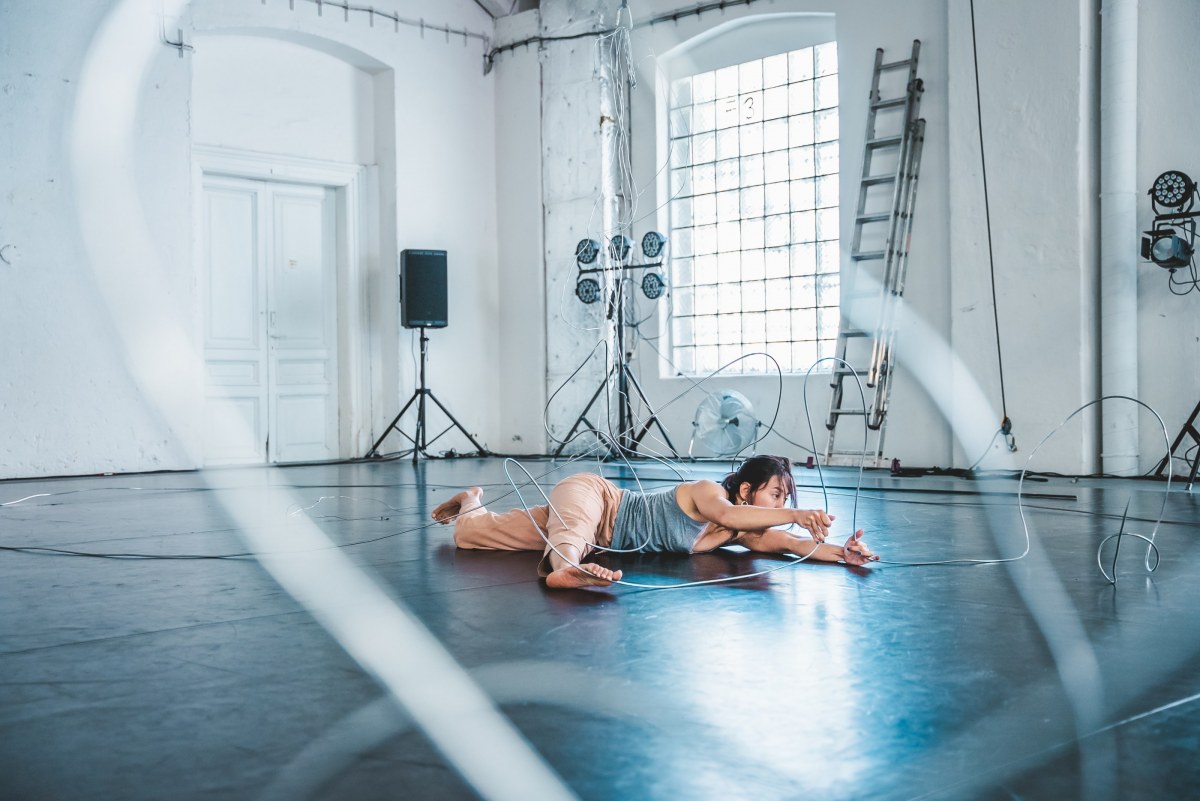
A significant part of your work addresses gendered and racialised constructs. From your perspective, what are the most pressing challenges facing contemporary circus today in this regard?
This is a difficult question to answer alone in a written form, so I’ll only give a glimpse of my thoughts and strongly invite anyone who would like to continue the discussion to reach out to me.
I truly believe we need spaces to think together, to dare to feel uncomfortable collectively in order to face the inequalities that allow us to stand where we are today. There is no single mind that can provide solutions to such complex issues. I wish we were organising more round-tables within the circus field, gathering professionals to better understand our working structures and to train ourselves to recognise how colonial, white, hetero-patriarchal systems operate and continue to nourish themselves through current modes of art production in Europe.
Contemporary European circus attracts many artists from outside Europe, for very diverse reasons. At the same time, the reality faced by many non-EU artists shares troubling similarities. I find it urgent to look at this collectively, and quite shameful that we continue to pretend that “talent” and “quality” alone determine who succeeds and who doesn’t.
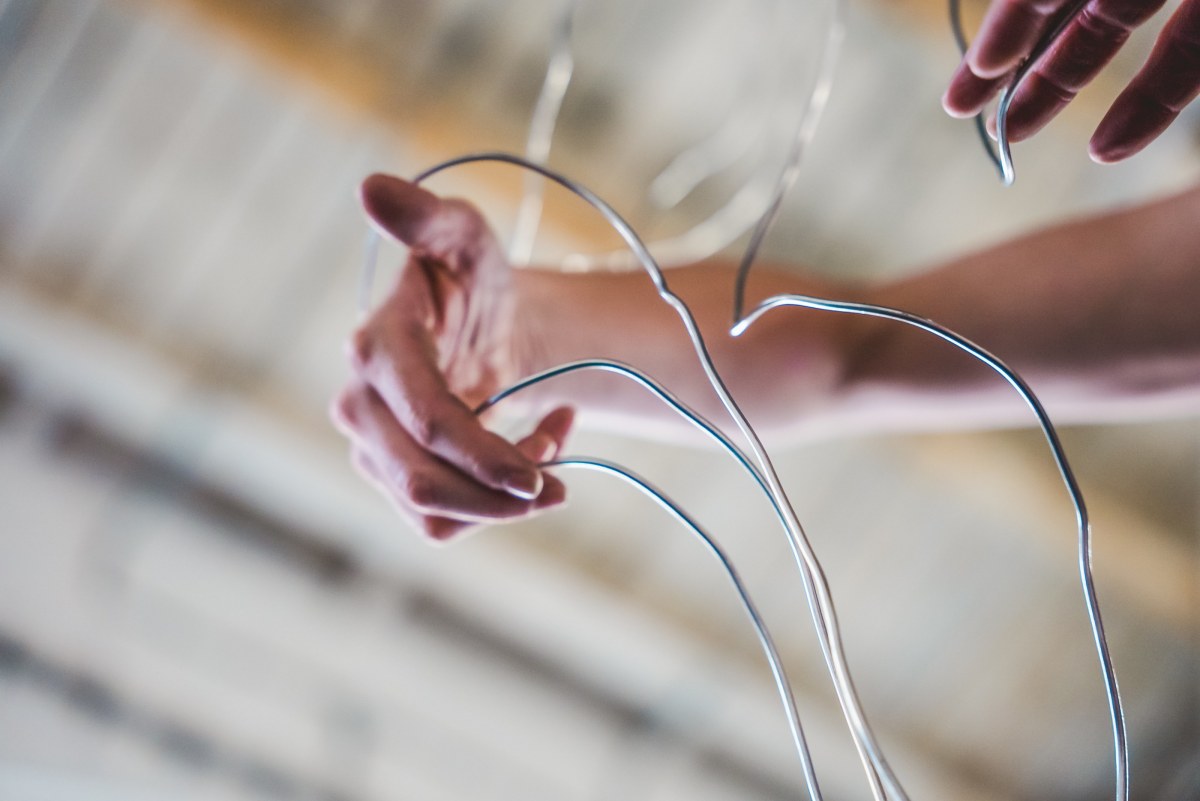
You are Brazilian and Japanese, you live in France, you have just completed an artistic residency in Prague. Your work takes place at the crossroads of multiple cultural and professional ecosystems. How does working across different national contexts affect your professional conditions as an artist?
Being a foreigner helps me not to forget that everything is about perspective and situatedness. I grew up feeling like a foreigner in the country I was born in, and it took me many years to understand how culture exceeds national borders and carries complex political histories that nations often try to flatten. In recent years, working across different cultural contexts has led to meaningful encounters that broadened my imagination and strengthened my work—sometimes simply through shared practices, feedback from different cultural perspectives, or working in another language.
This mobility helps me find a form of emancipation from the cultural and aesthetic pressure of trying to “root” somewhere. However, in financial terms, the question remains how to find better support for it, since “not being local” is often a major obstacle to more substantial funding.
Looking back, how did your selection as a circusnext shortlist influence your artistic and professional development? What role do support programmes play today in sustaining emerging circus artists — especially those working across borders and disciplines?
Broadening my network on a European scale would not have happened so quickly without the circusnext programme. It allowed me to connect with programmers but also with artists outside France, which had a strong impact on my professional development in the following years. Today, I see support programmes as a safer, production-wise option for emerging artists to attempt ambitious and personal work. They can help artists reach a level of production comfort that otherwise feels unreachable. I believe that institutionalising artistic production is necessary to guarantee better working conditions, yet in the political context we find ourselves in, it is a very double-sided coin. The way institutions are conceived today is largely inherited from colonial and patriarchal histories. Creating and sustaining them therefore requires a high level of responsibility to resist these logics and to search for alternatives. It is not an easy task, but we have been having these conversations with the circusnext team for some time now, and it’s been a beautiful exchange. I strongly believe that, beyond artistic programmes, we need to create ways and spaces to think together about these broader issues.
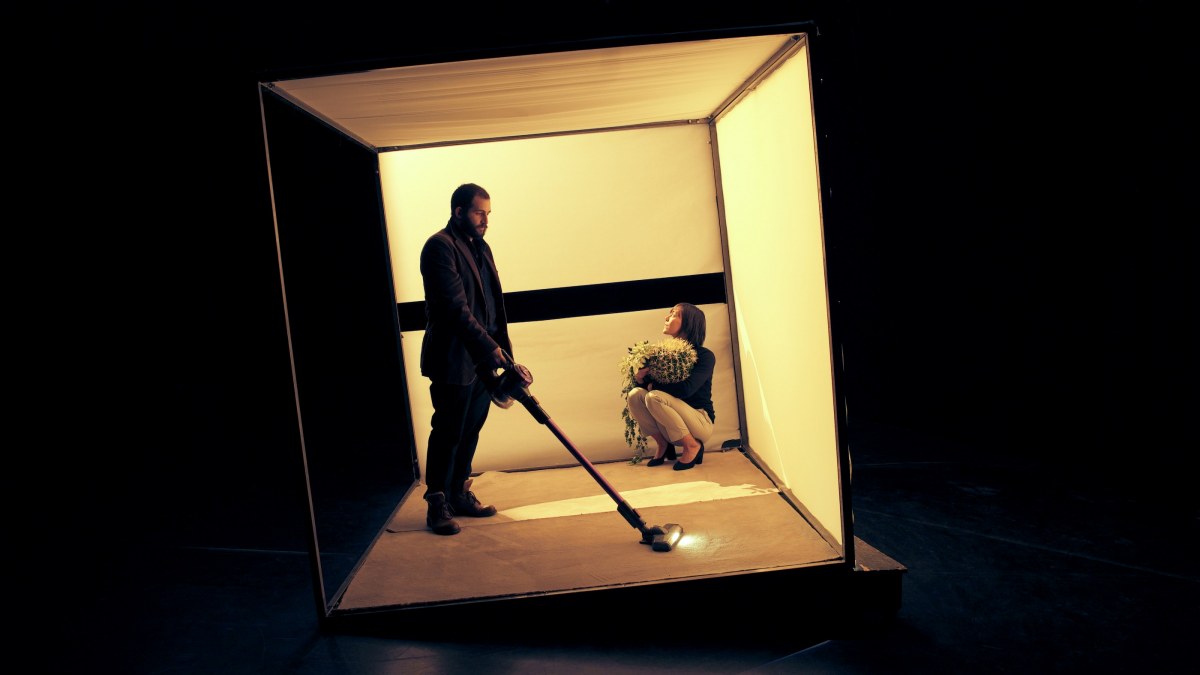
circusnext leads and coordinates the only circus platform project supported by the European Commission, which gathers 24 member venues from 15 European countries. They cooperate together to identify emerging authors who generate unique and original circus creations, and to support them in the making and circulation of their works. More information on https://circusnext.eu/

Amanda trained circus at CEFAC (BR), FLIC (IT) and Le Lido (FR) in aerial rope, between 2011 and 2017. In 2021, she co-founded her company, Diagonale du Vide. Her creations include It’s Winter, the Sky is Blue (Groupe Gestes 2022, CircusNext 2023), Your emptiness is not as empty as you think (Beaumarchais 2024) and ascension fusion (a poetry project). In parallel, she mediates workshops and collaborates as an external eye for different companies and cultural projects.
- WHO WE ARE
- WHAT WE DO
- THE NETWORK
- Coordinator
 Funders
write us: infocircostrada@artcena.fr